
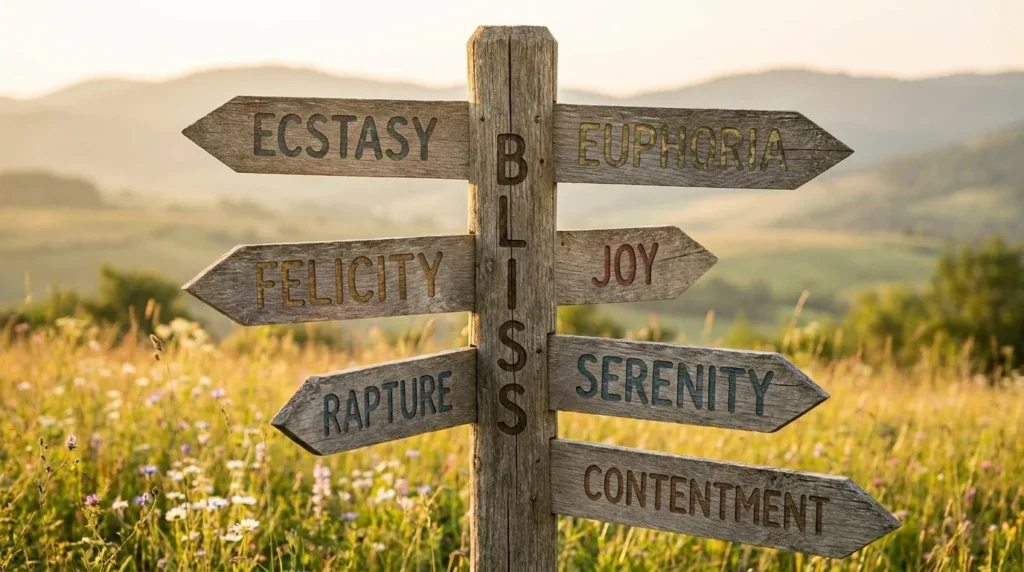
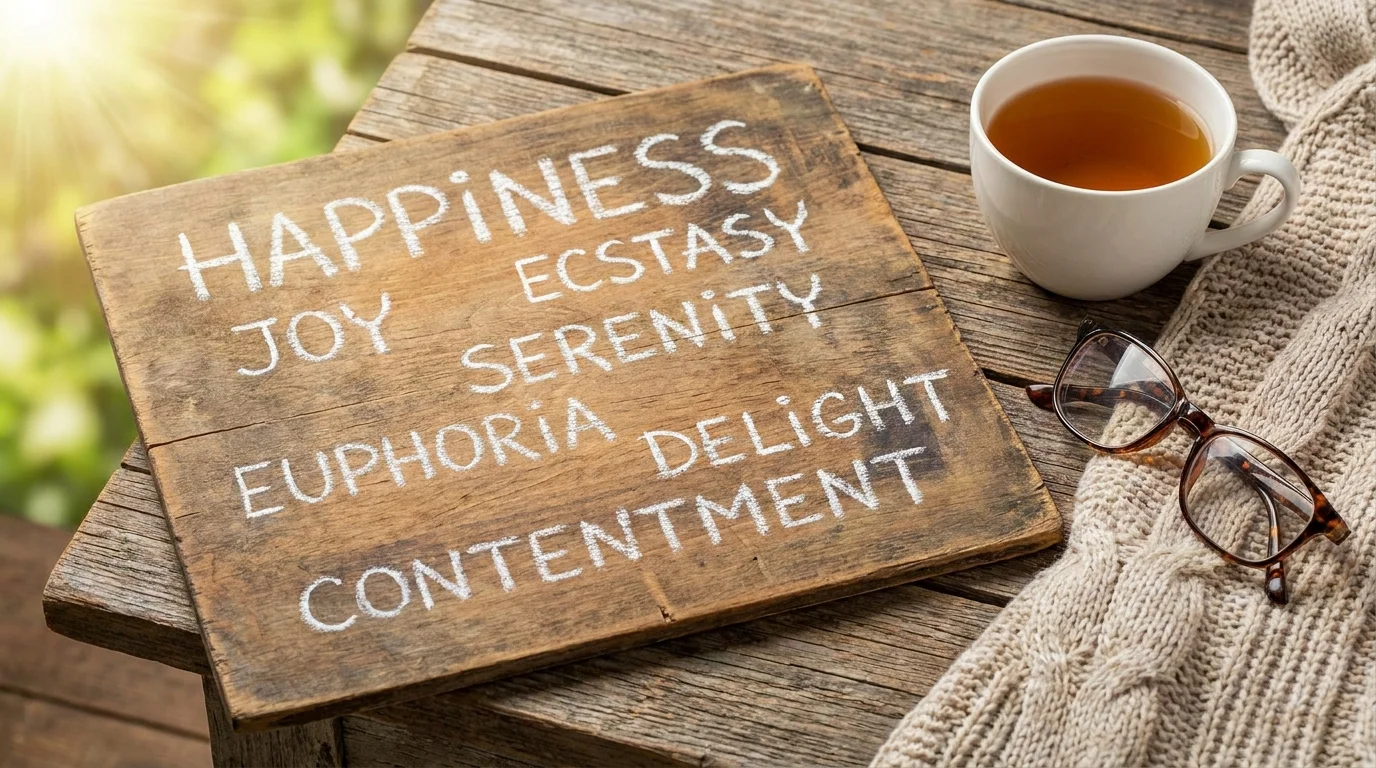
Quick Synonym List
Closest Alternatives
- Happiness
- Joy
- Delight
- Pleasure
- Contentment
- Satisfaction
- Felicity
Strong or Intense Alternatives
- Ecstasy
- Euphoria
- Rapture
- Elation
- Exhilaration
- Jubilation
- Exultation
Peaceful Forms of Bliss
- Serenity
- Tranquility
- Peace
- Contentment
- Inner peace
- Fulfillment
Warm or Literary Alternatives
- Delight
- Joy
- Felicity
- Rapture
- Paradise
- Heaven
- Enchantment
Closest Synonyms for Bliss
Happiness
Meaning: A general feeling of pleasure, satisfaction, or emotional well-being.
How it differs: Happiness is broader and more common than bliss. Bliss usually suggests a deeper or more complete state of happiness.
Tone: Neutral.
Best for: Everyday speech, general writing, and emotional descriptions.
Example:
“She felt genuine happiness when her family arrived.”
Watch out: Use bliss when you want a stronger or more poetic sense of happiness.
Joy
Meaning: A strong feeling of happiness and pleasure.
How it differs: Joy is one of the closest alternatives to bliss, but it can describe either a temporary feeling or a lasting emotional quality.
Example:
“The children filled the house with joy.”
Watch out: Joy does not always imply the peaceful, almost perfect feeling associated with bliss.
Delight
Meaning: Great pleasure or enjoyment.
How it differs: Delight often comes from something enjoyable, surprising, or pleasing.
Example:
“She watched the performance with delight.”
Best for: Experiences, entertainment, reactions, and pleasant surprises.
Pleasure
Meaning: A feeling of enjoyment or satisfaction.
How it differs: Pleasure is broader and can describe physical, emotional, or intellectual enjoyment.
Example:
“He took great pleasure in helping others.”
Watch out: Pleasure can have meanings that bliss does not, so context matters.
Contentment
Meaning: A peaceful feeling of satisfaction with what you have or where you are.
How it differs: Contentment is calmer than bliss. It suggests quiet satisfaction rather than overwhelming happiness.
Example:
“She felt a deep sense of contentment sitting beside the lake.”
Best for: Peaceful happiness, simple living, and emotional balance.
Satisfaction
Meaning: The feeling that something has met your needs, expectations, or desires.
Example:
“Completing the project gave him a strong sense of satisfaction.”
Watch out: Satisfaction can sound practical or goal-oriented, whereas bliss is more emotional.
Felicity
Meaning: Intense happiness or great delight.
How it differs: Felicity is a relatively formal or literary word and is much less common in everyday conversation.
Example:
“The couple lived together in domestic felicity.”
Best for: Literary writing and formal descriptions.
Strong Synonyms for Bliss
Ecstasy
Meaning: An overwhelming feeling of happiness, excitement, or delight.
How it differs: Ecstasy is usually more intense and emotionally dramatic than bliss.
Example:
“The crowd erupted in ecstasy when the team won.”
Watch out: It can suggest extreme emotional excitement rather than peaceful happiness.
Euphoria
Meaning: An intense feeling of happiness, excitement, or well-being.
How it differs: Euphoria emphasizes an unusually elevated emotional state.
Example:
“She felt a wave of euphoria after hearing the good news.”
Best for: Describing intense emotional highs.
Rapture
Meaning: A state of intense delight or joy.
How it differs: Rapture has a literary and highly emotional quality. It can suggest being completely absorbed in joy.
Example:
“He listened to the music in rapture.”
Tone: Literary and intense.
Elation
Meaning: Great happiness and excitement, especially after success or good news.
Example:
“She was filled with elation after receiving the award.”
How it differs: Elation is often connected to a particular event or achievement.
Exhilaration
Meaning: A strong feeling of excitement and happiness.
Example:
“He felt exhilaration as the plane lifted into the air.”
How it differs: This word emphasizes excitement, energy, and stimulation rather than peaceful happiness.
Jubilation
Meaning: Extremely joyful celebration.
Example:
“The streets were filled with jubilation after the victory.”
Best for: Public celebrations, victories, and major achievements.
Exultation
Meaning: A feeling of triumphant joy or extreme happiness.
Example:
“The players celebrated their victory with exultation.”
Tone: Formal or literary.
Peaceful Synonyms for Bliss
Not all bliss is energetic. Sometimes it is quiet, calm, and deeply satisfying.
Serenity
Meaning: A state of calmness and peacefulness.
Example:
“The garden gave her a feeling of serenity.”
How it differs: Serenity emphasizes peace rather than excitement.
Tranquility
Meaning: A state of calm and freedom from disturbance.
Example:
“He enjoyed the tranquility of the countryside.”
Best for: Places, environments, and peaceful emotional states.
Peace
Meaning: A state of calm, quiet, or freedom from conflict and disturbance.
Example:
“After years of stress, she finally found peace.”
How it differs: Peace is much broader than bliss and does not necessarily imply happiness.
Inner Peace
Meaning: A calm and balanced emotional state.
Example:
“Meditation helped him find inner peace.”
This phrase is particularly useful when bliss means deep emotional calm rather than excitement.
Fulfillment
Meaning: A feeling of satisfaction from having achieved something meaningful or having one’s needs met.
Example:
“Teaching gave her a deep sense of fulfillment.”
How it differs: Fulfillment often comes from purpose or meaningful achievement, whereas bliss can arise from pure pleasure or happiness.
Synonyms vs. Near Synonyms
| Word | Relationship | Can Replace “Bliss”? | Tone | Best Context |
|---|---|---|---|---|
| Happiness | Close synonym | Usually | Neutral | Everyday use |
| Joy | Close synonym | Usually | Warm | Emotional happiness |
| Delight | Near synonym | Sometimes | Positive | Enjoyment |
| Pleasure | Near synonym | Sometimes | Neutral | Enjoyment/satisfaction |
| Contentment | Near synonym | Sometimes | Calm | Peaceful satisfaction |
| Ecstasy | Strong synonym | Sometimes | Intense | Extreme happiness |
| Euphoria | Strong/near synonym | Sometimes | Intense | Emotional high |
| Rapture | Strong synonym | Sometimes | Literary | Deep emotional joy |
| Elation | Contextual alternative | Sometimes | Positive | Success/good news |
| Serenity | Contextual alternative | No | Calm | Peacefulness |
| Tranquility | Contextual alternative | No | Peaceful | Calm environments |
| Fulfillment | Contextual alternative | No | Reflective | Purpose/satisfaction |
| Jubilation | Contextual alternative | No | Celebratory | Victory/events |
| Exhilaration | Contextual alternative | Sometimes | Energetic | Excitement |
Comparison Table
| Word/Phrase | Meaning | Tone | Strength | Best Use | Interchangeable? |
|---|---|---|---|---|---|
| Bliss | Complete happiness or pleasure | Warm/literary | Very strong | Deep happiness | — |
| Joy | Strong happiness | Warm | Strong | General emotion | Often |
| Happiness | General positive emotion | Neutral | Medium | Everyday use | Sometimes |
| Delight | Great pleasure | Positive | Strong | Enjoyment | Sometimes |
| Contentment | Peaceful satisfaction | Calm | Medium | Quiet happiness | Sometimes |
| Ecstasy | Overwhelming happiness | Intense | Very strong | Extreme emotion | Sometimes |
| Euphoria | Intense emotional high | Intense | Very strong | Excitement | Sometimes |
| Rapture | Intense delight | Literary | Very strong | Emotional/literary writing | Sometimes |
| Serenity | Calm peacefulness | Calm | Medium | Inner peace | No |
| Fulfillment | Meaningful satisfaction | Reflective | Strong | Purpose/achievement | No |
| Jubilation | Joyful celebration | Energetic | Very strong | Victories | No |
How to Choose the Right Alternative
Choose Joy for Deep Happiness
Use joy when you want a natural word for strong happiness.
“Seeing her family again filled her with joy.”
Choose Euphoria for an Emotional High
Use euphoria when happiness is unusually intense and exciting.
“The announcement created a sense of euphoria.”
Choose Contentment for Peaceful Happiness
Use contentment when the feeling is calm and satisfying.
“He found contentment in a simple life.”
Choose Serenity for Calm
Use serenity when the key idea is peace rather than excitement.
“The quiet beach brought her serenity.”
Choose Ecstasy for Extreme Emotion
Use ecstasy when the emotion is overwhelming.
“The fans were in ecstasy after the historic win.”
Choose Fulfillment for Meaning and Purpose
Use fulfillment when happiness comes from doing something meaningful.
“Volunteering gave him a sense of fulfillment.”
Choose Delight for Enjoyment
Use delight when something gives you great pleasure.
“The children watched the magician with delight.”
Sentence Transformations
Deep Happiness
Original:
“She was in bliss during her vacation.”
Better Alternative:
“She was in complete happiness during her vacation.”
Why:
This is grammatically possible, but bliss is actually more natural and expressive here. Not every synonym improves the sentence.
Peaceful Feeling
Original:
“He experienced bliss while sitting beside the ocean.”
Better Alternative:
“He experienced serenity while sitting beside the ocean.”
Why:
Serenity highlights the calm atmosphere rather than intense happiness.
Exciting Success
Original:
“The team celebrated in bliss after winning.”
Better Alternative:
“The team celebrated in jubilation after winning.”
Why:
Jubilation specifically fits public or collective celebration.
Personal Achievement
Original:
“She felt bliss after completing the project.”
Better Alternative:
“She felt elation after completing the project.”
Why:
Elation naturally connects strong happiness with achievement.
Meaningful Work
Original:
“His work brought him bliss.”
Better Alternative:
“His work brought him fulfillment.”
Why:
Fulfillment emphasizes meaningful satisfaction rather than pure pleasure.
Extreme Happiness
Original:
“The audience felt bliss when the singer appeared.”
Better Alternative:
“The audience erupted in euphoria when the singer appeared.”
Why:
Euphoria communicates a much more intense collective emotional reaction.
Quiet Satisfaction
Original:
“She found bliss in her peaceful routine.”
Better Alternative:
“She found contentment in her peaceful routine.”
Why:
Contentment is a better fit for quiet, stable satisfaction.
Strong Literary Emotion
Original:
“He looked at the painting with bliss.”
Better Alternative:
“He looked at the painting in rapture.”
Why:
Rapture creates a more intense and literary image of being completely absorbed by beauty.
Common Mistakes
Mistake 1: Treating bliss and happiness as identical
They overlap, but bliss usually suggests a deeper or more complete state.
Better approach: Use happiness for general positive emotion and bliss for unusually intense pleasure or peace.
Mistake 2: Using euphoria for every kind of happiness
Euphoria implies a highly elevated emotional state.
Better approach: Use contentment or serenity for calm happiness.
Mistake 3: Calling serenity a direct synonym
Serenity means calmness and peacefulness. It does not necessarily mean happiness.
Better approach: Use serenity only when peace is central to the meaning.
Mistake 4: Using jubilation for private happiness
Jubilation usually suggests celebration, often after a victory or major success.
Better approach: Use joy or happiness for ordinary personal feelings.
Mistake 5: Using literary words in everyday conversation
Words such as rapture and felicity can sound poetic or formal.
Better approach: In casual speech, use joy, happiness, delight, or great pleasure.
Mistake 6: Assuming stronger always means better
If you say someone experienced ecstasy when they were simply pleased, you may exaggerate the emotion.
Better approach: Match the intensity of the word to the actual feeling.
Mistake 7: Replacing bliss just to avoid repetition
Sometimes bliss is the most precise and beautiful choice.
Better approach: Keep the original word when it expresses exactly what you mean.
Grammar and Usage
Bliss is primarily an uncountable noun.
Common constructions include:
“a state of bliss”
“pure bliss”
“complete bliss”
“sheer bliss”
“in bliss”
“blissful ignorance”
The adjective form is blissful.
“They spent a blissful afternoon together.”
The adjective blissful describes something that produces or expresses bliss.
Bliss vs. Blissful
Bliss is the feeling itself:
“She experienced pure bliss.”
Blissful describes a person, experience, or state:
“It was a blissful afternoon.”

When Not to Use an Alternative
Sometimes bliss is better than any replacement.
Use bliss when you specifically want to communicate a combination of deep happiness, pleasure, and complete satisfaction.
For example:
“Lying under the stars in complete silence was pure bliss.”
Replacing bliss with happiness makes the sentence more ordinary. Replacing it with serenity emphasizes calmness but loses some of the pleasure. Replacing it with euphoria makes the feeling sound much more intense and energetic.
The original word can therefore be the most accurate choice.
Writing Tips
The best way to avoid repeating bliss is not to search for a more complicated word every time.
First identify the feeling:
- Deep happiness → joy
- General happiness → happiness
- Great enjoyment → delight
- Peaceful satisfaction → contentment
- Calmness → serenity
- Extreme emotional excitement → euphoria
- Overwhelming happiness → ecstasy
- Success-related happiness → elation
- Celebratory happiness → jubilation
- Meaningful satisfaction → fulfillment
This approach makes your writing more precise instead of simply more complicated.
Keep Bliss When It Works Best
If your sentence is:
“The quiet morning was pure bliss.”
there may be no need to change it.
Good writing is not about using the largest possible vocabulary. It is about choosing the word that communicates the intended feeling naturally and accurately.
Editor’s Choice
Joy
The most versatile alternative for strong happiness. It works naturally in both everyday and more polished writing.
Contentment
The best choice when bliss means peaceful satisfaction rather than excitement.
Euphoria
The strongest practical choice when the feeling is an intense emotional high.
Serenity
Excellent when the central idea is calmness, peace, and emotional stillness.
Delight
A natural choice for strong enjoyment or pleasure without the extreme intensity of ecstasy