
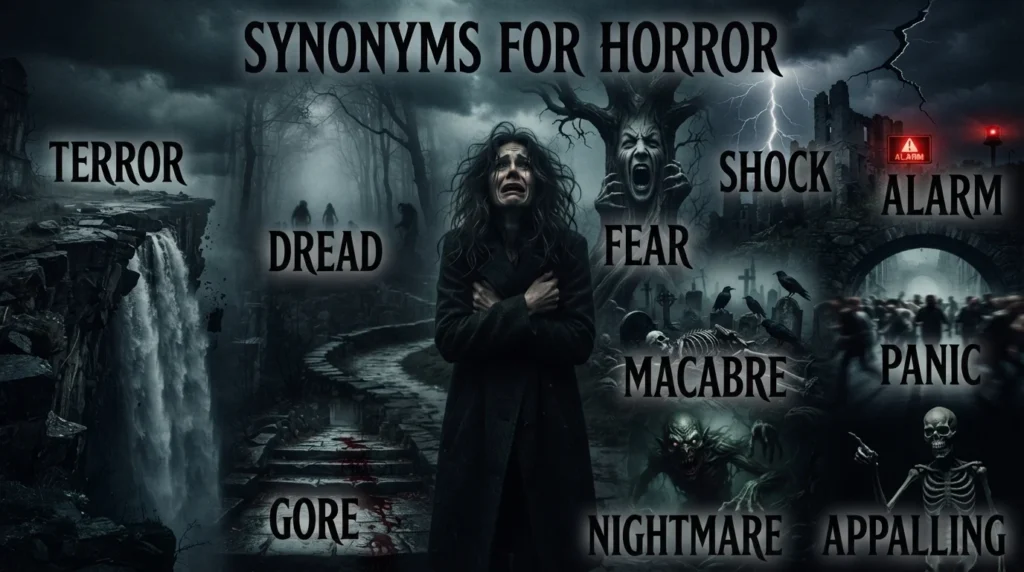
Quick Synonym List
Because horror has several meanings, the best alternative depends on what kind of feeling or experience you mean.
For intense fear
- terror
- fear
- fright
- dread
- alarm
- panic
- trepidation
- apprehension
- terror
For shock or distress
- shock
- dismay
- consternation
- distress
- anguish
- devastation
- disbelief
For disgust or repulsion
- revulsion
- disgust
- loathing
- abhorrence
- repugnance
- detestation
- hatred
For something frightening
- terror
- nightmare
- monstrosity
- abomination
- nightmare scenario
- frightening spectacle
For horror as a genre
- horror fiction
- horror story
- scary fiction
- supernatural horror
- dark fiction
- Gothic fiction
- psychological horror
- terror fiction
Informal alternatives
- fear
- fright
- scare
- nightmare
- nightmare situation
- terrifying experience
Key distinction: Horror can describe intense fear, profound shock, strong disgust, or a genre of entertainment. Words such as terror, dread, revulsion, and shock overlap with particular senses but are not interchangeable in every sentence.
What Does “Horror” Mean?
Horror is a noun referring to an intense feeling of fear, shock, disgust, or deep distress, especially when something is frightening, disturbing, or deeply unacceptable.
For example:
She watched the accident in horror.
Here, horror combines shock, fear, and distress.
The word can also describe something that causes this reaction:
The conditions in the building were a horror.
In another common sense, horror refers to a genre of books, movies, games, and other entertainment designed to frighten or disturb people.
I enjoy watching horror movies.
Because the word has several meanings, its best synonym depends heavily on context.
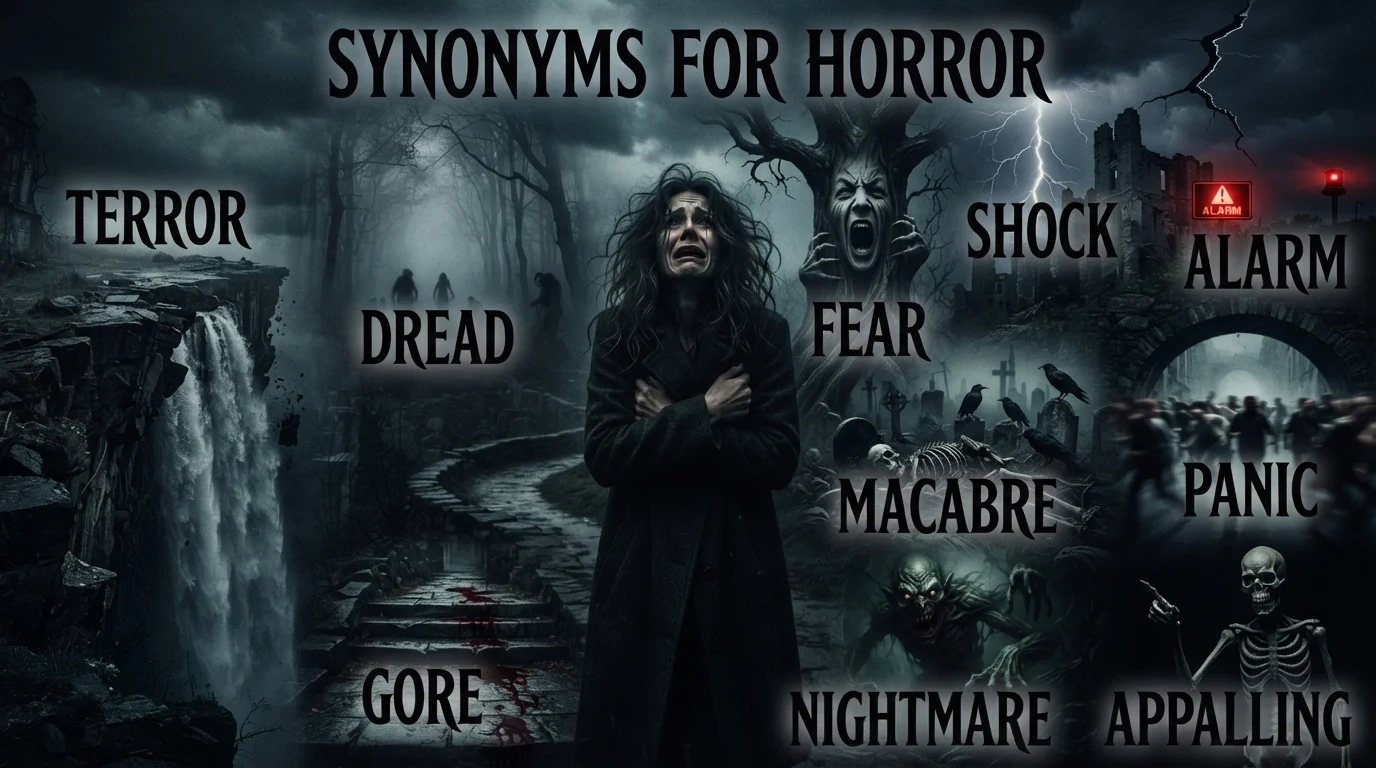
The Best Synonyms for Horror
1. Terror
Terror is one of the closest synonyms for horror when the meaning is extreme fear.
- Meaning: intense or overwhelming fear
- Tone: strong and dramatic
- Best for: frightening situations, threats, violence, danger, fiction
- Interchangeability: often, but not always
Example:
The villagers lived in terror during the war.
Horror vs. terror:
Terror focuses more directly on extreme fear. Horror can include fear but may also involve shock, disgust, or moral revulsion.
2. Fear
Fear is the broadest and most common word for the emotion associated with danger or threat.
- Meaning: an unpleasant emotional response to danger or the possibility of harm
- Tone: neutral
- Best for: everyday and formal writing
- Interchangeability: sometimes
Example:
He felt fear when he heard the noise outside.
Fear is broader and less intense than horror. Something can cause fear without causing horror.
3. Dread
Dread refers to intense fear or anxiety about something expected or anticipated.
- Meaning: fearful anticipation
- Tone: serious
- Best for: future events, uncertainty, bad news, danger
- Interchangeability: context-dependent
Example:
She waited with dread for the results.
Dread emphasizes what someone expects to happen.
Compare:
He looked at the scene in horror.
He waited in dread for the news.
The first describes a reaction to something witnessed. The second describes fear about something that has not yet happened.
4. Fright
Fright means sudden or intense fear.
- Meaning: fear caused by something unexpected or alarming
- Tone: neutral
- Best for: sudden scares, children, everyday situations
- Interchangeability: limited
Example:
The loud explosion gave everyone a fright.
Fright is often more immediate and temporary than horror.
5. Alarm
Alarm describes fear or concern caused by a perceived danger or problem.
- Meaning: sudden concern or fear
- Tone: neutral to formal
- Best for: warnings, emergencies, risks, public situations
- Interchangeability: limited
Example:
The announcement caused widespread alarm.
Alarm often suggests that people recognize a potential threat and become concerned.
6. Panic
Panic describes sudden, overwhelming fear that may affect a person’s ability to think or behave calmly.
- Meaning: uncontrollable or overwhelming fear
- Tone: strong
- Best for: emergencies, crowds, crises, sudden danger
- Interchangeability: limited
Example:
The crowd began to panic when the fire alarm sounded.
A person can experience horror without panicking, so the words are not exact synonyms.
7. Trepidation
Trepidation means nervous or fearful anticipation.
- Meaning: anxiety or fear about what may happen
- Tone: formal
- Best for: formal writing, anticipated events, uncertainty
- Interchangeability: limited
Example:
She entered the room with some trepidation.
It is generally milder than terror and more closely related to dread.
8. Apprehension
Apprehension can mean anxiety or fear about something that may happen.
- Meaning: anxious anticipation
- Tone: formal or professional
- Best for: uncertain situations, risks, future events
- Interchangeability: limited
Example:
He approached the meeting with some apprehension.
Apprehension is usually less intense than horror.
9. Shock
Shock describes a powerful emotional response to something unexpected, disturbing, or traumatic.
- Meaning: intense surprise or distress
- Tone: neutral
- Best for: accidents, deaths, disasters, unexpected news
- Interchangeability: sometimes
Example:
The news was met with shock and disbelief.
Use shock when the unexpected nature of the event matters more than fear.
10. Dismay
Dismay means a strong feeling of distress, disappointment, or alarm caused by something unexpected or troubling.
- Meaning: distress or alarm
- Tone: formal
- Best for: bad news, setbacks, disturbing discoveries
- Interchangeability: limited
Example:
To her dismay, the project had failed.
Dismay is generally less intense than horror.
11. Consternation
Consternation means strong feelings of shock, confusion, and anxiety caused by something unexpected.
- Meaning: alarmed distress
- Tone: formal
- Best for: formal writing, public reactions, unexpected events
- Interchangeability: limited
Example:
The sudden announcement caused widespread consternation.
It is more formal and less common in everyday conversation.
12. Revulsion
Revulsion describes a powerful feeling of disgust or rejection.
- Meaning: intense disgust
- Tone: strong
- Best for: disturbing sights, immoral behavior, unpleasant experiences
- Interchangeability: only when horror involves disgust
Example:
She reacted with revulsion to the scene.
Revulsion is particularly useful when horror means disgust rather than fear.
13. Disgust
Disgust is a strong feeling of dislike or revulsion caused by something unpleasant or offensive.
- Meaning: intense dislike or revulsion
- Tone: strong
- Best for: offensive behavior, unpleasant sights, smells, actions
- Interchangeability: sometimes
Example:
He watched the scene with disgust.
Unlike horror, disgust does not necessarily involve fear.
14. Loathing
Loathing means intense hatred or disgust.
- Meaning: extreme dislike
- Tone: very strong
- Best for: people, behavior, ideas, situations
- Interchangeability: limited
Example:
She felt deep loathing toward the corrupt official.
Loathing is more about intense hatred or disgust than fear.
15. Abhorrence
Abhorrence means an intense feeling of hatred, disgust, or moral rejection.
- Meaning: strong moral disgust
- Tone: formal
- Best for: immoral acts, violence, injustice, unacceptable behavior
- Interchangeability: limited
Example:
He expressed his abhorrence of cruelty.
This word works especially well when horror involves a strong moral response.
16. Repugnance
Repugnance means strong disgust or opposition.
- Meaning: intense dislike or disgust
- Tone: formal
- Best for: moral, physical, or emotional rejection
- Interchangeability: limited
Example:
The proposal was met with widespread repugnance.
It is more formal than disgust.
17. Nightmare
Nightmare can describe either a frightening dream or an extremely unpleasant situation.
- Meaning: terrifying dream or extremely difficult experience
- Tone: neutral to dramatic
- Best for: experiences, situations, events
- Interchangeability: contextual
Example:
The journey home became a complete nightmare.
Nightmare is a vivid alternative when describing an extremely unpleasant experience rather than the emotion itself.
18. Distress
Distress refers to severe emotional suffering, anxiety, or sadness.
- Meaning: emotional suffering
- Tone: neutral to formal
- Best for: difficult events, trauma, suffering
- Interchangeability: limited
Example:
The incident caused considerable distress among residents.
Distress is broader and less fear-focused than horror.
19. Anguish
Anguish means severe emotional or mental suffering.
- Meaning: intense emotional pain
- Tone: strong and serious
- Best for: grief, loss, suffering, traumatic experiences
- Interchangeability: limited
Example:
The family watched the events in anguish.
Use anguish when emotional pain is more important than fear.
20. Abomination
Abomination refers to something considered extremely offensive, hateful, or morally unacceptable.
- Meaning: something deeply detested
- Tone: very strong, formal, or dramatic
- Best for: moral condemnation, religious or literary contexts
- Interchangeability: very limited
Example:
He described the act as an abomination.
It describes the thing causing the reaction, not usually the emotional state itself.
Horror Synonyms by Context
Horror as Intense Fear
When horror means extreme fear, the strongest alternatives include:
- terror
- dread
- fright
- alarm
- panic
- trepidation
- apprehension
Example
She stared at the approaching storm in horror.
Possible alternatives:
She stared at the approaching storm in terror.
She watched the storm with dread.
The sudden thunder gave her a fright.
Each version changes the emotional emphasis.
Horror as Shock
When someone reacts to terrible or unexpected news, use:
- shock
- dismay
- consternation
- disbelief
- distress
- anguish
Example
The family reacted to the news with horror.
Possible rewrite:
The family reacted to the news with shock and disbelief.
This works when surprise is more important than fear.
Horror as Disgust
When horror expresses strong disgust or moral rejection, consider:
- revulsion
- disgust
- abhorrence
- repugnance
- loathing
- detestation
Example
He watched the abuse in horror.
Depending on the intended meaning:
He watched the abuse with revulsion.
He expressed his abhorrence of the abuse.
The first emphasizes emotional disgust; the second emphasizes moral rejection.
Horror as a Frightening Experience
If horror refers to an experience rather than an emotion, alternatives include:
- nightmare
- ordeal
- terrifying experience
- frightening experience
- traumatic experience
- nightmare situation
Example
The evacuation was a horror for everyone involved.
A more natural alternative might be:
The evacuation was a nightmare for everyone involved.
Horror as a Genre
When horror refers to entertainment, the alternatives are different.
Related terms include:
- horror fiction
- horror story
- scary fiction
- supernatural horror
- psychological horror
- Gothic fiction
- dark fiction
- monster fiction
- supernatural thriller
These are genre-related terms, not true synonyms.
Example
She enjoys reading horror.
Possible alternatives:
She enjoys reading horror fiction.
She enjoys reading Gothic fiction.
She enjoys reading psychological horror.
The exact choice depends on the type of horror.
Horror vs. Terror vs. Dread
These three words are often confused.
Horror
Broad emotional reaction involving fear, shock, disgust, or distress.
She looked at the scene in horror.
Terror
Extreme fear caused by immediate or perceived danger.
The attack spread terror throughout the city.
Dread
Fearful anticipation of something expected.
He felt dread as the deadline approached.
Simple rule
Horror = disturbing reaction
Terror = extreme fear
Dread = fear of what may happen
Horror vs. Fear
Fear is the general emotional response to danger.
Horror is usually stronger and can combine fear with shock, disgust, or distress.
Compare:
He felt fear when he heard footsteps.
He watched the aftermath in horror.
The first describes a basic fear response. The second suggests a much more disturbing reaction.
Horror vs. Shock
Shock emphasizes surprise and emotional disturbance.
Horror emphasizes a disturbing or frightening reaction.
She reacted with shock when she heard the news.
She reacted with horror when she saw what had happened.
A person can experience shock without fear and horror without surprise.
Horror vs. Disgust
Disgust focuses on strong dislike or revulsion.
Horror can include disgust but also commonly involves fear or shock.
He looked at the spoiled food with disgust.
He looked at the violent scene in horror.
Horror vs. Revulsion
Revulsion is stronger and more specific than horror when the reaction is one of disgust.
She felt horror at the cruelty.
She felt revulsion at the cruelty.
The second emphasizes intense rejection or disgust.
Horror vs. Dread
Dread generally looks toward the future.
He felt dread before the surgery.
Horror usually describes a reaction to something already witnessed, experienced, or understood.
He watched the accident in horror.
Comparison Table
| Word | Main meaning | Tone | Strength | Best use |
|---|---|---|---|---|
| Horror | Intense fear, shock, or disgust | Strong | High | Disturbing events |
| Terror | Extreme fear | Strong | Very high | Immediate danger |
| Fear | Response to danger | Neutral | Variable | General situations |
| Dread | Fearful anticipation | Serious | High | Future events |
| Fright | Sudden fear | Neutral | Medium | Sudden scares |
| Alarm | Concern about danger | Neutral/formal | Medium | Warnings |
| Panic | Overwhelming fear | Strong | Very high | Emergencies |
| Shock | Extreme surprise or distress | Neutral | High | Unexpected events |
| Dismay | Distress or alarm | Formal | Medium | Bad news |
| Revulsion | Intense disgust | Strong | Very high | Repulsive things |
| Disgust | Strong dislike | Neutral | High | Unpleasant things |
| Loathing | Intense hatred/disgust | Strong | Very high | People or actions |
| Abhorrence | Moral disgust | Formal | Very high | Immoral acts |
| Nightmare | Terrible experience | Dramatic | High | Difficult situations |
| Anguish | Severe emotional pain | Serious | Very high | Grief and suffering |
True Synonyms vs. Related Alternatives
| Alternative | Relationship to horror | Can replace it? | Best context |
|---|---|---|---|
| Terror | Close synonym | Often | Extreme fear |
| Fear | Broader synonym | Sometimes | General fear |
| Dread | Near synonym | Sometimes | Anticipated danger |
| Fright | Near synonym | Sometimes | Sudden fear |
| Alarm | Contextual alternative | Sometimes | Perceived danger |
| Panic | Contextual alternative | Sometimes | Overwhelming fear |
| Shock | Related alternative | Sometimes | Unexpected events |
| Dismay | Related alternative | Sometimes | Disturbing news |
| Revulsion | Contextual alternative | Only for disgust | Repulsive scenes |
| Disgust | Related alternative | Sometimes | Unpleasant things |
| Loathing | Related alternative | Rarely | Intense hatred |
| Nightmare | Contextual alternative | Sometimes | Terrible experiences |
| Anguish | Related alternative | Sometimes | Emotional suffering |
| Abomination | Related noun | Rarely | Morally detested things |
| Horror fiction | Genre term | No | Books and entertainment |
Formal Alternatives to Horror
For formal or academic writing, consider the exact emotion before choosing a replacement.
- Terror — extreme fear
- Dread — fearful anticipation
- Apprehension — anxious expectation
- Consternation — shock and alarm
- Revulsion — intense disgust
- Abhorrence — moral disgust
- Distress — emotional suffering
- Anguish — severe emotional pain
Example
Informal:
The public reacted with horror.
More specific:
The public reacted with shock and dismay.
If the response involved moral disgust:
The public expressed abhorrence at the violence.
Professional Alternatives to Horror
In professional writing, avoid dramatic language unless the situation genuinely warrants it.
Instead of:
The report described the situation with horror.
Consider:
The report described the situation as deeply disturbing.
Or:
The report documented significant distress and concern among residents.
Or:
The findings prompted widespread alarm.
These alternatives can sound more precise and measured.
Sentence Transformations
1. Extreme fear
Original:
The villagers lived in horror during the conflict.
Alternative:
The villagers lived in terror during the conflict.
Why: Terror more directly expresses extreme fear.
2. Fearful anticipation
Original:
She waited in horror for the results.
Alternative:
She waited in dread for the results.
Why: Dread emphasizes fear about something that has not yet happened.
3. Sudden fear
Original:
The noise caused horror among the children.
Alternative:
The noise gave the children a fright.
Why: Fright works naturally for sudden fear.
4. Unexpected news
Original:
The announcement was met with horror.
Alternative:
The announcement was met with shock and dismay.
Why: This specifies surprise and emotional distress.
5. Disgust
Original:
She looked at the scene in horror.
Alternative:
She looked at the scene with revulsion.
Why: Revulsion emphasizes disgust rather than fear.
6. Moral rejection
Original:
He expressed his horror at the abuse.
Alternative:
He expressed his abhorrence of the abuse.
Why: Abhorrence emphasizes strong moral rejection.
7. Difficult experience
Original:
The journey became a horror.
Alternative:
The journey became a nightmare.
Why: Nightmare naturally describes an extremely unpleasant experience.
8. Public concern
Original:
The discovery caused horror among residents.
Alternative:
The discovery caused widespread alarm among residents.
Why: Alarm is more measured and professional when people become concerned about a threat.
9. Academic writing
Original:
The images caused horror among viewers.
Alternative:
The images caused significant distress among viewers.
Why: Distress can be more precise and restrained in formal writing.
10. Horror genre
Original:
He writes horror.
Alternative:
He writes horror fiction.
Why: Horror fiction clearly identifies the literary genre.
Grammar and Usage
Horror is primarily a countable or uncountable noun, depending on meaning.
Uncountable emotional sense
She watched in horror.
He reacted with horror.
The news filled them with horror.
Countable sense
When referring to a terrible thing or experience, horror can be countable:
The horrors of war are difficult to describe.
The film contains several scenes of horror.
Common expressions include:
- in horror
- with horror
- to my horror
- horror at
- horror of
- filled with horror
- a sense of horror
- absolute horror
- deep horror
- utter horror
- the horrors of war
- horror movie
- horror film
- horror story
- horror fiction
Horror + at
Use horror at when reacting to an event or situation:
She expressed horror at the violence.
Horror + of
Use horror of when referring to fear or intense dislike of something:
He had a horror of spiders.
The expression a horror of can also describe strong aversion.
Common Mistakes
1. Treating horror and terror as completely identical
Terror focuses more specifically on extreme fear. Horror can include fear, shock, disgust, or distress.
2. Using dread for an immediate reaction
Dread usually concerns something anticipated.
I waited in dread.
For something already witnessed:
I watched in horror.
3. Using disgust when fear is intended
Disgust describes revulsion, not necessarily fear.
4. Using panic for every intense emotional response
Panic implies overwhelming fear that may affect behavior or judgment.
5. Using nightmare as an emotion
A nightmare can be a frightening dream or an extremely unpleasant situation. It is not normally the name of the emotional state itself.
6. Confusing horror with the horror genre
She felt horror.
describes an emotion.
She watches horror.
describes a genre.
7. Using abhorrence for ordinary fear
Abhorrence suggests intense moral disgust or hatred. It is not a general synonym for fear.
8. Choosing the strongest synonym automatically
Words such as terror, revulsion, anguish, and abhorrence can make a sentence considerably stronger than the original. Use them only when the context supports that intensity.
When “Horror” Is the Better Word
Sometimes horror is more useful than any narrower synonym because it combines several emotional reactions.
For example:
She watched the aftermath in horror.
This could involve fear, shock, disgust, sadness, and disbelief simultaneously. Replacing horror with fear may remove the shock or disgust; replacing it with disgust may remove the fear.
Similarly:
The horrors of war
is broader and more powerful than:
The fears of war.
The first can include violence, suffering, death, destruction, trauma, and moral shock.
Keep horror when the emotional response is deliberately broad or when you do not need to identify one specific component.
Which Synonym Should You Choose?
Use terror when:
You mean extreme fear.
Use fear when:
You want the broadest and most neutral term.
Use dread when:
Someone is afraid of something expected in the future.
Use fright when:
The fear is sudden or caused by a scare.
Use alarm when:
People become concerned about a possible danger.
Use panic when:
Fear becomes overwhelming and difficult to control.
Use shock when:
Unexpectedness and emotional disturbance are central.
Use dismay when:
Something causes distress, disappointment, or alarm.
Use revulsion when:
The reaction is intense disgust.
Use abhorrence when:
The reaction involves strong moral rejection.
Use nightmare when:
You are describing an extremely unpleasant experience.
Use distress when:
Emotional suffering is the main idea.
Use anguish when:
The emotional pain is severe.