

What Does Trash Mean?
Trash can function as both a noun and a verb.
Trash as a Noun
As a noun, trash can mean unwanted or discarded material.
Please take the trash outside.
It can also refer to worthless or unwanted objects:
The garage was full of old trash.
In informal language, it can describe something considered very poor in quality:
That movie was trash.
Trash as a Verb
As a verb, trash can mean to damage, destroy, criticize, or reject something.
The vandals trashed the room.
Critics trashed the new movie.
Because these meanings are different, there is no single synonym that works in every situation.
Quick Answer: Synonyms for Trash
Here are 30+ useful synonyms and context-specific alternatives:
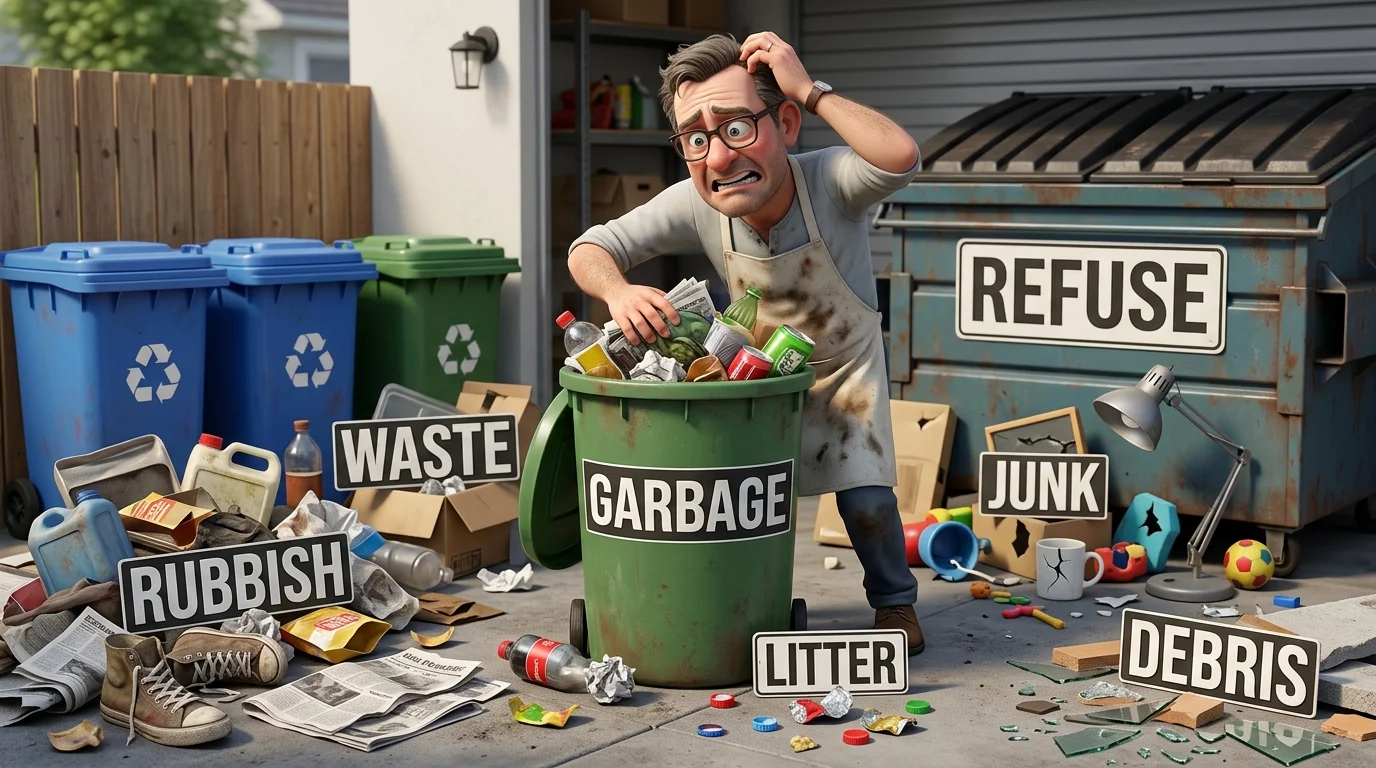
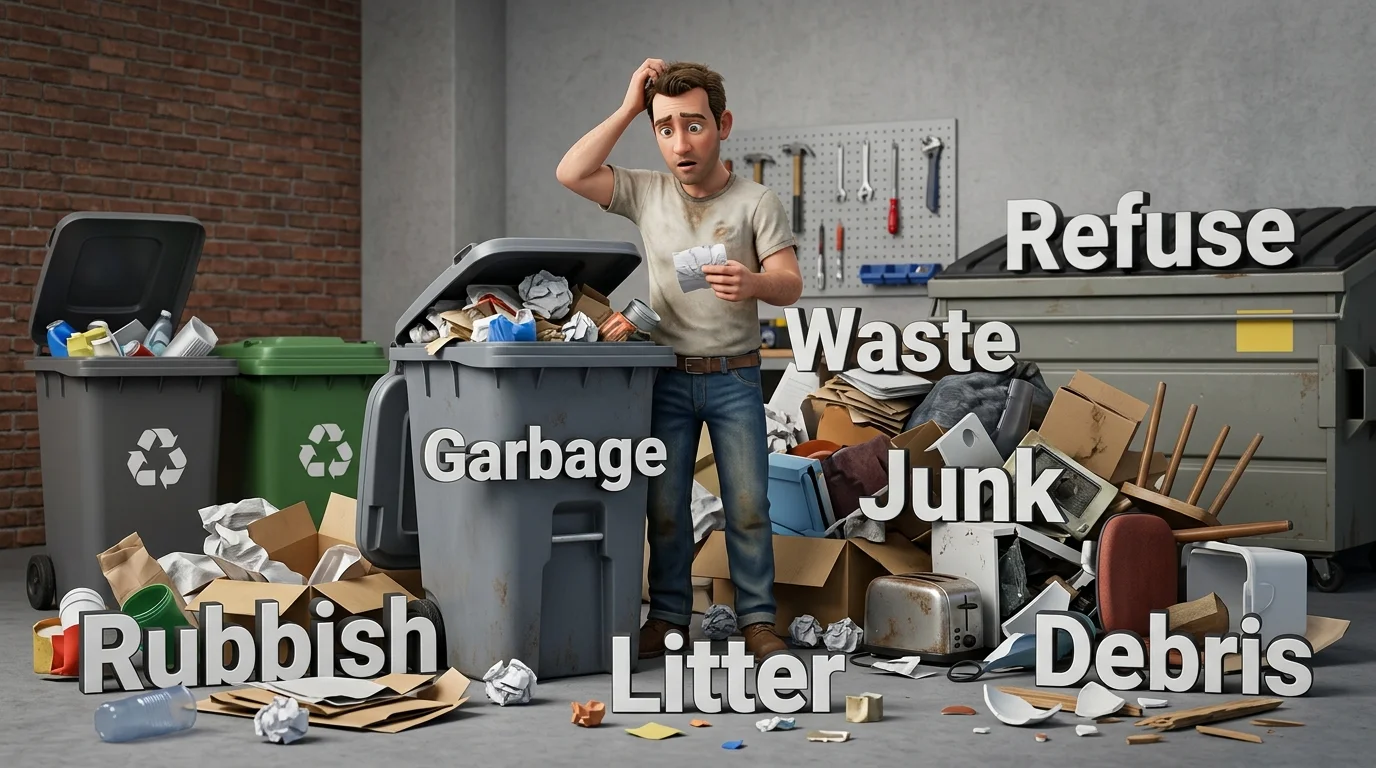
- Garbage
- Rubbish
- Waste
- Refuse
- Litter
- Junk
- Debris
- Discarded material
- Detritus
- Scrap
- Clutter
- Discards
- Wreckage
- Remains
- Leftovers
- Scrap material
- Rejects
- Castoffs
- Flotsam
- Filth
- Dirt
- Mess
- Worthless stuff
- Nonsense
- Crap
- Garbage
- Drivel
- Twaddle
- Rubbish
- Baloney
- Destroy
- Damage
- Ruin
Not all of these are exact synonyms. Some describe specific kinds of discarded material, while others relate to poor quality, disorder, or the verb trash.
1. Garbage
Garbage is one of the closest synonyms for trash, especially in American English.
It usually means unwanted material that is thrown away.
Example:
Please take out the trash.
Please take out the garbage.
It is particularly common for household waste.
Best for: Everyday American English and household waste.
2. Rubbish
Rubbish is a common synonym for trash, especially in British English.
Example:
The rubbish needs to be collected.
It can also mean something worthless, foolish, or untrue.
That’s complete rubbish.
Best for: British English, general waste, and informal criticism.
3. Waste
Waste is a broad and relatively formal term for unwanted material.
Example:
The factory produces a large amount of industrial waste.
It can refer to household, industrial, chemical, food, or other unwanted materials.
Best for: Environmental, scientific, industrial, and formal writing.
4. Refuse
Refuse means discarded or unwanted material.
It is pronounced REF-yoos when used as a noun.
Example:
The city has introduced new refuse-collection rules.
It is more formal than trash or garbage.
Best for: Formal, technical, municipal, and environmental contexts.
5. Litter
Litter means waste that has been left in an inappropriate or public place.
Example:
Volunteers collected litter from the beach.
The important distinction is that litter is generally waste left lying around, rather than waste properly placed in a bin.
6. Junk
Junk usually means old, unwanted, or low-value objects.
Example:
The garage is full of junk.
It can refer to broken furniture, old electronics, unused possessions, or miscellaneous objects.
Unlike trash, junk does not always mean something that must immediately be thrown away.
7. Debris
Debris means scattered pieces or remains left after something has been damaged, destroyed, or broken.
Example:
Workers cleared the debris from the road.
It is especially appropriate for construction sites, accidents, storms, explosions, and damaged structures.
8. Discarded Material
Discarded material is a neutral and descriptive phrase for something that has been thrown away or rejected.
Example:
The researchers analyzed the discarded material.
It is useful in formal or technical writing when you want to avoid an informal word such as trash.
9. Detritus
Detritus refers to waste, debris, or material left behind after something breaks down or is destroyed.
Example:
Leaves and other organic detritus covered the forest floor.
It is more specialized and literary than trash.
10. Scrap
Scrap refers to leftover pieces or material that are no longer useful in their original form.
Example:
The factory sells scrap metal.
Common expressions include:
- scrap metal
- scrap paper
- scrap wood
- scrap material
11. Clutter
Clutter means a collection of things scattered around a space in an untidy or disorganized way.
Example:
I need to clear the clutter from my desk.
Clutter is not necessarily trash. Some clutter may still be useful.
12. Discards
Discards are things that have been rejected or thrown away.
Example:
The workers separated the useful materials from the discards.
This word is more formal and is particularly useful when discussing sorting or recycling.
13. Wreckage
Wreckage means the damaged remains of something that has been destroyed or badly damaged.
Example:
Emergency workers searched through the wreckage.
It is commonly used for vehicles, aircraft, buildings, and structures.
14. Remains
Remains refers to what is left after something has been removed, destroyed, consumed, or used.
Example:
The remains of the damaged building were cleared away.
It is broader than trash and should be used according to context.
15. Leftovers
Leftovers are things remaining after something has been used, eaten, or completed.
Example:
We put the leftovers in the refrigerator.
Food leftovers are not necessarily trash, so this word should not automatically replace trash.
16. Rejects
Rejects are products or materials that fail to meet required standards.
Example:
The factory separated the rejects from the finished products.
This is more specific than trash.
17. Castoffs
Castoffs are unwanted things that someone has discarded or given away.
Example:
The charity accepts clothing castoffs.
It often refers to clothes, possessions, or other items no longer wanted.
18. Flotsam
Flotsam traditionally refers to floating debris or wreckage, especially material from a ship.
It can also be used figuratively for miscellaneous unwanted things.
Example:
The beach was covered with flotsam after the storm.
It is much more specialized than trash.
19. Filth
Filth means extremely dirty or disgusting material.
Example:
The floor was covered in filth.
It emphasizes dirtiness or disgusting conditions, not simply something being unwanted.
20. Dirt
Dirt means unwanted soil, dust, or unclean material.
Example:
There was dirt all over the floor.
It is not a direct synonym for trash, but it can overlap in contexts involving unwanted material.
21. Mess
Mess means a dirty, untidy, or disorganized condition.
Example:
The room was a complete mess.
A mess can contain trash, but the two words are not identical.
Synonyms for Trash by Meaning
| Meaning of Trash | Best Alternatives |
|---|---|
| Household waste | Garbage, rubbish, waste |
| General discarded material | Waste, refuse, discards |
| Waste left outdoors | Litter |
| Old unwanted objects | Junk |
| Broken scattered material | Debris |
| Industrial material | Scrap, waste |
| Damaged remains | Wreckage |
| Untidy collection of things | Clutter, mess |
| Very dirty material | Filth |
| Poor-quality content | Garbage, rubbish, nonsense |
| Nonsensical speech | Drivel, twaddle, baloney |
| Damage badly | Ruin, destroy, damage |
Synonyms for Trash Meaning “Poor Quality”
In informal English, trash can describe something considered worthless, badly made, or extremely poor.
Depending on tone, alternatives include:
- Garbage
- Rubbish
- Crap
- Junk
- Nonsense
- Drivel
- Twaddle
- Baloney
- Worthless material
- Poor-quality material
Examples
This movie is trash.
Possible alternatives:
This movie is garbage.
This movie is rubbish.
This movie is terrible.
This movie is poor-quality entertainment.
The appropriate choice depends on how informal or harsh you want to sound.
Trash Synonyms for Bad Writing or Content
When criticizing writing, information, or media, consider:
- Nonsense
- Drivel
- Rubbish
- Garbage
- Twaddle
- Gibberish
- Baloney
- Poor-quality content
- Worthless material
Example
The article was full of trash.
More precise alternatives:
The article was full of nonsense.
The article contained poor-quality information.
The article was full of unsupported claims.
For professional writing, the last option is much more constructive and precise than simply calling something trash.
Trash as a Verb: Synonyms
When trash is used as a verb, it can have several meanings.
Meaning 1: Damage or destroy
Useful alternatives:
- Damage
- Ruin
- Destroy
- Wreck
- Vandalize
- Devastate
Example:
The vandals trashed the apartment.
The vandals wrecked the apartment.
Meaning 2: Criticize harshly
Useful alternatives:
- Criticize
- Attack
- Condemn
- Slam
- Denounce
- Ridicule
- Disparage
Example:
Critics trashed the new film.
Critics slammed the new film.
Here, trash does not mean physically destroy anything.
Formal Synonyms for Trash
For formal or academic writing, prefer:
- Waste
- Refuse
- Discarded material
- Discards
- Debris
- Scrap
- Detritus
- Residual material
Example
Informal:
The factory produces a lot of trash.
Formal:
The factory produces a significant amount of industrial waste.
This sounds more precise and professional.
Environmental Synonyms for Trash
Environmental writing often uses:
- Waste
- Solid waste
- Municipal waste
- Litter
- Plastic waste
- Marine debris
- Refuse
- Discarded materials
- Scrap
- Residual waste
Example
Plastic trash is damaging marine ecosystems.
A more formal version is:
Plastic waste is damaging marine ecosystems.
Trash vs. Garbage
Trash and garbage are extremely close in American English.
Take out the trash.
Take out the garbage.
Both are natural.
However, garbage can sometimes refer more specifically to household food waste, while trash can be broader.
The distinction varies by region and speaker.
Trash vs. Rubbish
Trash is especially common in American English.
Rubbish is especially common in British English.
Where is the trash bin?
Where is the rubbish bin?
Both communicate the general idea of discarded material.
Trash vs. Waste
Waste is broader and more formal.
Household trash
Household waste
Industrial waste
Food waste
Plastic waste
For environmental or professional writing, waste is often the better choice.
Trash vs. Litter
These words should not always be exchanged.
Trash means unwanted discarded material generally.
Litter means waste that has been left in an inappropriate place, especially outdoors or in public.
Put your trash in the bin.
Do not leave litter on the street.
Trash vs. Junk
Trash is generally material intended to be thrown away.
Junk often means unwanted or low-value objects that may still be kept, sold, donated, or recycled.
The trash needs to go outside.
The garage is full of junk.
Trash vs. Debris
Debris usually means scattered remains resulting from damage, destruction, construction, or natural events.
The street was covered with trash.
The street was covered with storm debris.
The second suggests material left behind by the storm.
Common Collocations With Trash
Natural expressions include:
- take out the trash
- throw away the trash
- trash can
- trash bin
- trash bag
- trash collection
- trash disposal
- trash removal
- household trash
- kitchen trash
- food trash
- plastic trash
- electronic trash
- illegal dumping of trash
- pick up trash
- collect trash
- separate trash
- recycle trash
- reduce trash
- dispose of trash
As a verb:
- trash a room
- trash a house
- trash a car
- trash a reputation
- trash a movie
- trash an idea
- trash someone’s work
Sentence Transformations
Household Waste
Original:
Please take out the trash.
Alternative:
Please take out the garbage.
British English
Original:
The trash needs to be collected.
Alternative:
The rubbish needs to be collected.
Formal Writing
Original:
The factory produces a lot of trash.
Alternative:
The factory produces a significant amount of waste.
Outdoor Waste
Original:
The park was full of trash.
Alternative:
The park was full of litter.
Damaged Material
Original:
Workers cleared the trash after the storm.
Alternative:
Workers cleared the debris after the storm.
Harsh Criticism
Original:
Critics trashed the movie.
Alternative:
Critics slammed the movie.
Common Mistakes When Using Trash Synonyms
1. Using litter for all types of waste
Litter generally refers to waste left in inappropriate places, especially public spaces.
2. Treating junk and trash as identical
Junk can include unwanted possessions that are still usable or recyclable.
3. Using debris for ordinary household waste
Debris usually suggests scattered remains from damage, construction, or a natural event.
4. Using refuse without considering pronunciation
As a noun, refuse is pronounced REF-yoos. As a verb meaning decline, it is pronounced ri-FYOOZ.
5. Using informal criticism in professional writing
Words such as crap, garbage, and trash can sound overly casual or harsh in formal contexts.
6. Using waste when a more specific word is available
Waste is broad. If you’re specifically discussing plastic left on a street, litter may be more precise.
7. Confusing clutter with trash
Clutter is disorder caused by too many objects. Those objects are not necessarily waste.
How to Choose the Right Synonym for Trash
Use this quick guide:
- Household discarded material → Garbage / Trash
- British everyday term → Rubbish
- Formal general term → Waste
- Municipal or formal waste → Refuse
- Waste left in public → Litter
- Unwanted old objects → Junk
- Scattered remains → Debris
- Industrial leftovers → Scrap
- Untidy collection → Clutter
- Damaged remains → Wreckage
- Extremely dirty material → Filth
- Poor-quality content → Garbage / Rubbish / Nonsense
- Harshly criticize → Slam / Condemn / Attack
- Damage or destroy → Ruin / Wreck / Destroy
Key Takeaways
- Garbage, rubbish, and waste are among the closest alternatives to trash when referring to discarded material.
- Litter specifically refers to waste left in inappropriate places, while junk usually refers to unwanted objects.
- Debris, wreckage, and scrap describe particular types of discarded or leftover material and are not universal synonyms.
- When trash means poor-quality content, alternatives such as nonsense, rubbish, garbage, or drivel may be appropriate depending on tone.
- As a verb, trash can mean damage or destroy something or criticize it harshly, so the correct synonym depends on the intended meaning